Technology · 02 Perception

Volumetric Wavefield Synthesis

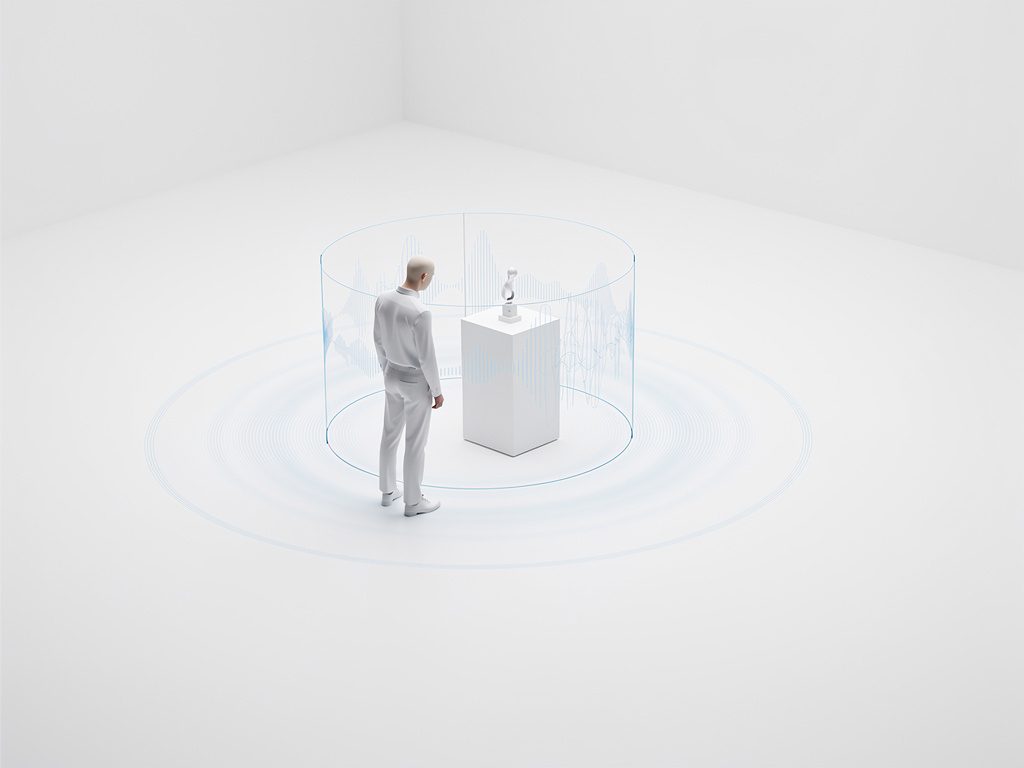
Volumetric Wavefield Synthesis is a method of reproducing sound so that spatial imaging, sound pressure level, and frequency response are consistent for every listener within a defined three-dimensional space. It is an alternative to conventional stereo, surround, and immersive audio systems. Rather than optimizing sound for a single listening position, it regenerates the intended auditory experience independently for each listener. The result is stable, hyper-realistic localization and immersion throughout the entire listening area.

Why sweet spots exist

Why conventional systems create sweet spots.

Stereo, surround, and object-based audio systems rely on fixed loudspeaker locations. Correct spatial imaging occurs only when the listener is positioned at equal distances from those loudspeakers. As the listener moves, distance relationships change. Arrival time shifts. Sound pressure level changes. Frequency response is altered. Spatial cues collapse. The result is a narrow region of accuracy surrounded by progressively degraded listening experiences.

All conventional stereo, surround, and immersive audio systems are boundary-limited. Sound can only originate from the boundaries of the listening space. Loudspeakers are placed at the perimeter and radiate inward. No matter how many loudspeakers are added, sound always enters the space from the outside. Each listener experiences a different geometric relationship to those boundaries. The sound field collapses differently for each position.
What volumetric means

Sound originating within the space.

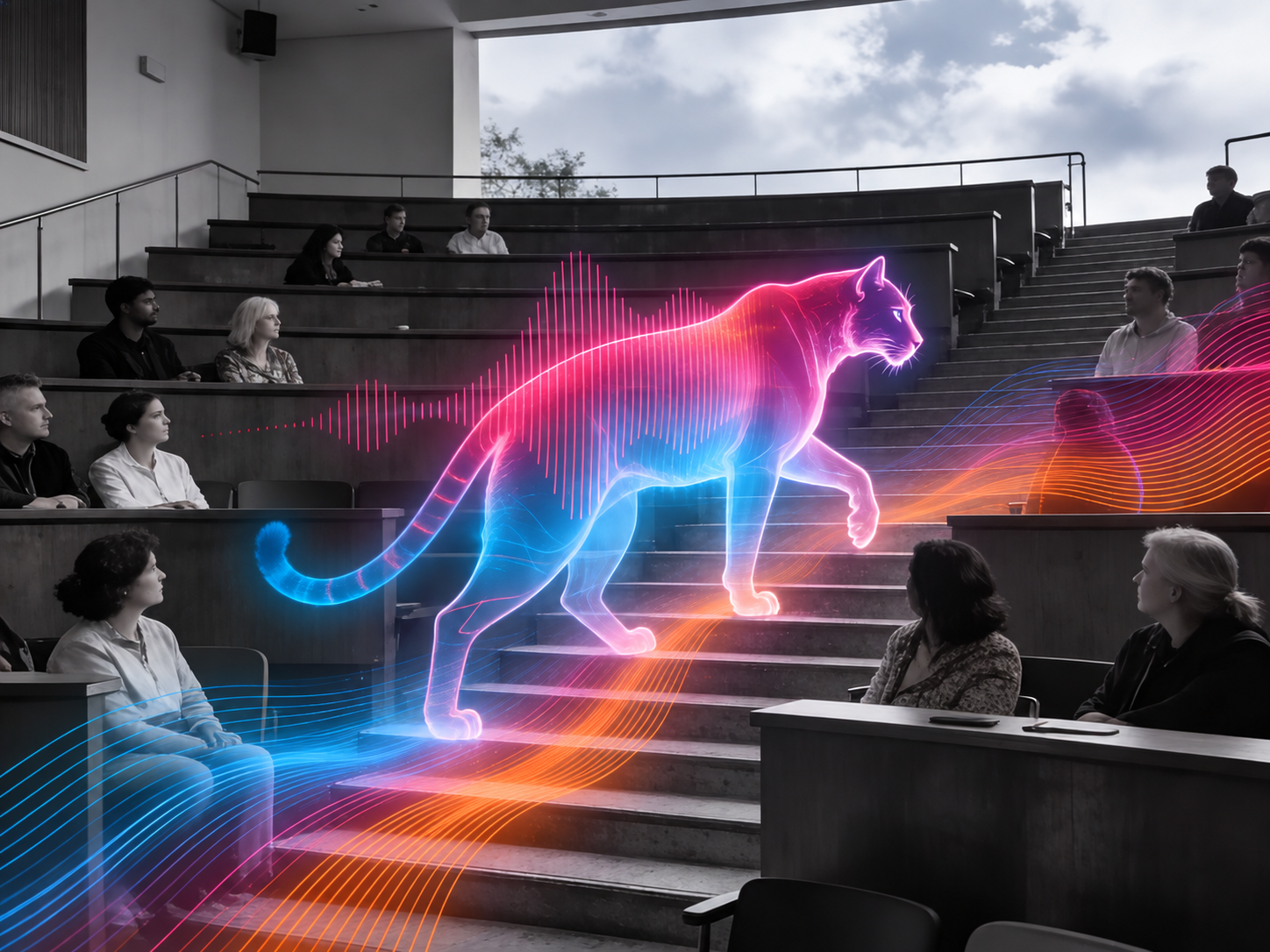
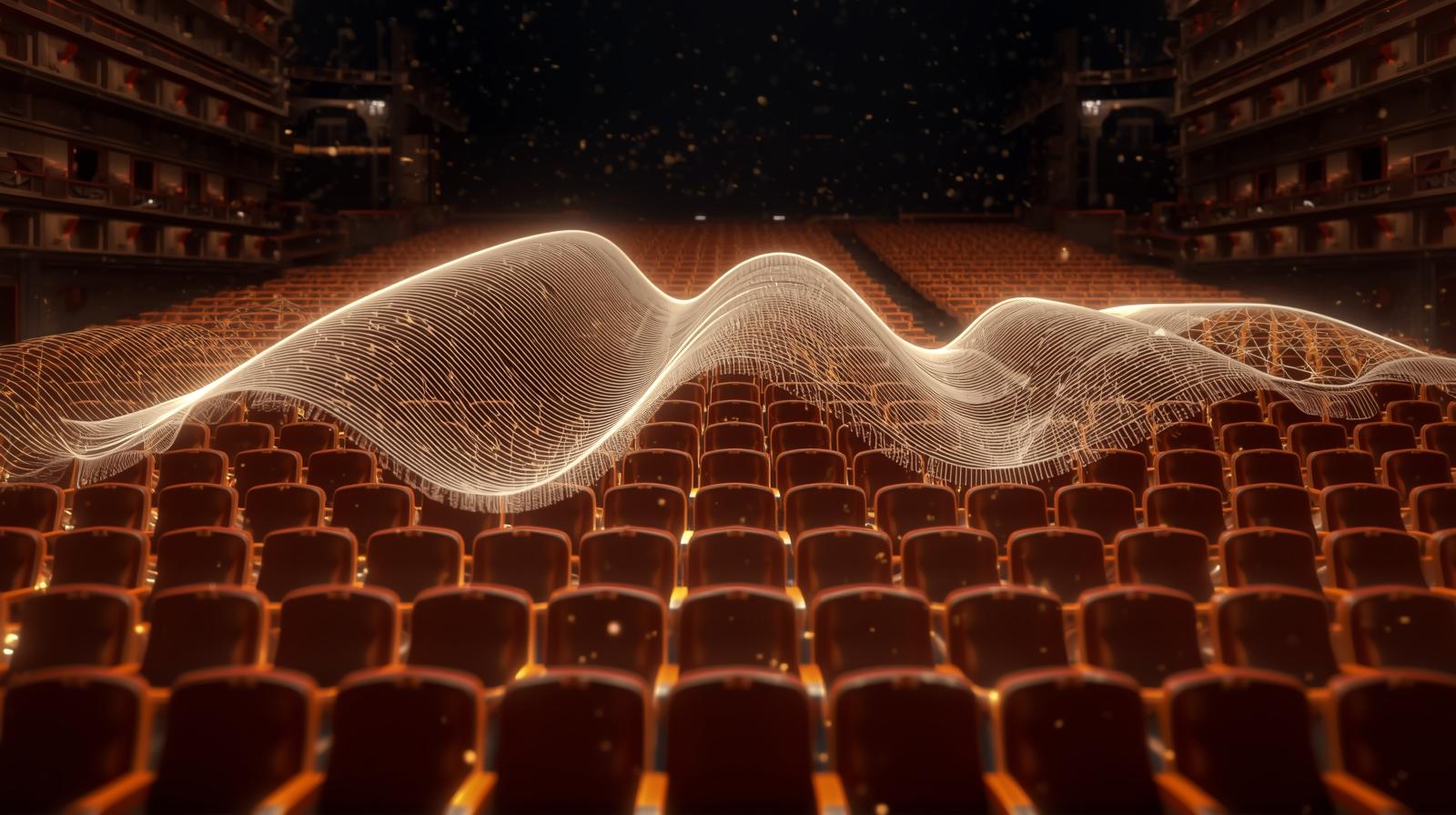
Volumetric Wavefield Synthesis removes the boundary limitation. Sound sources are distributed within the listening space itself. Rather than projecting sound inward, the system reconstructs the sound field throughout the volume. Listeners are surrounded by a regenerated auditory environment. Spatial cues no longer depend on maintaining equal distance to physical loudspeakers.

The wavefield principle

Sources distributed throughout the audience.

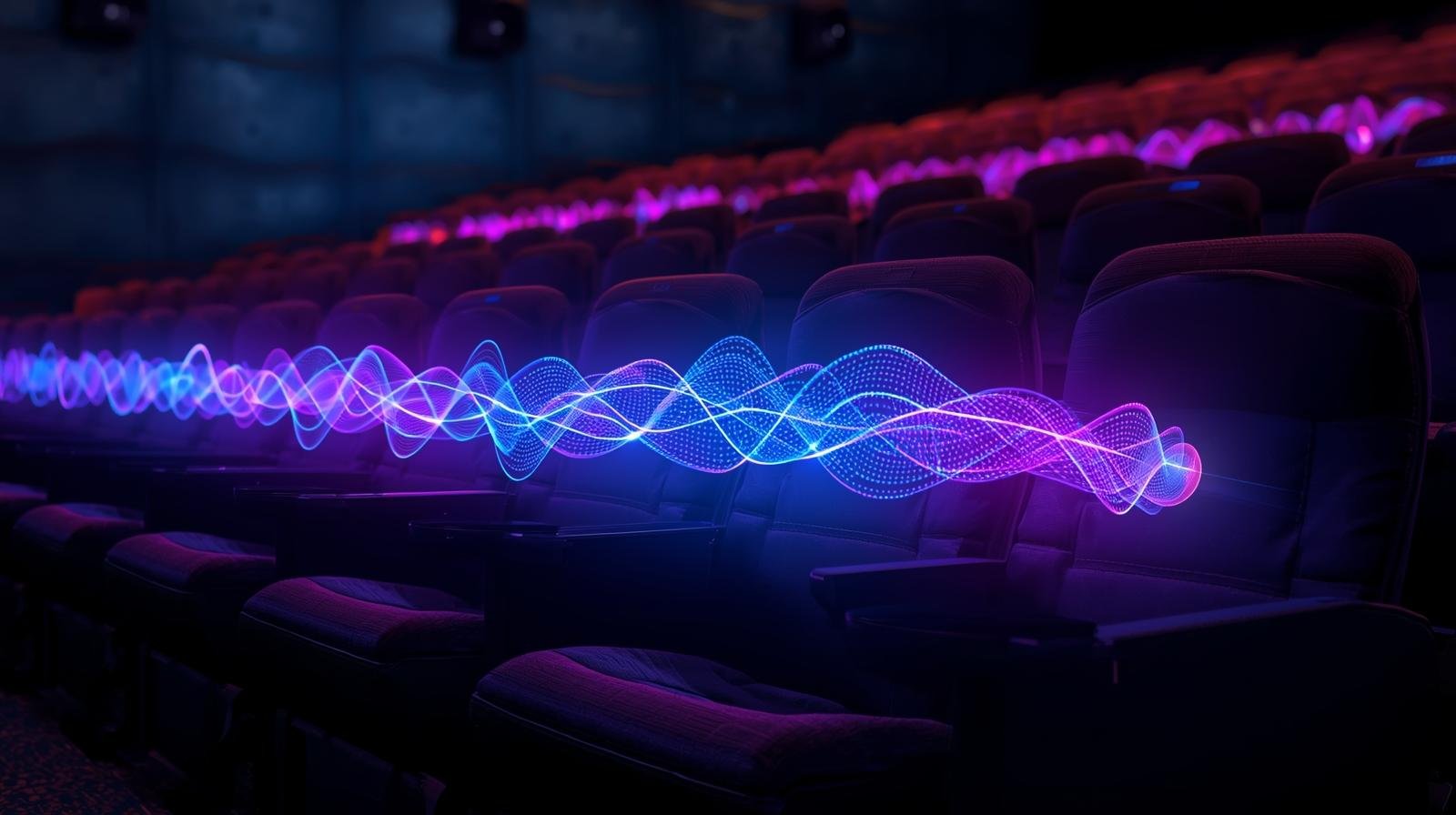
Volumetric Wavefield Synthesis uses multiple sound sources distributed throughout the listening volume. Each source contributes a controlled component of the overall sound field. These contributions are coordinated in time, amplitude, directionality and spectral content.

Together, they regenerate the intended sound image continuously throughout the space. The system maintains a dynamically variable wave rather than a fixed wavefront.

Directional intent

End-fire principles, applied algorithmically.

Accurate localization requires not only spatial reconstruction, but controlled directionality. Volumetric Wavefield Synthesis incorporates end-fire array principles within its wavefield algorithms. End-fire principles use time-aligned source sequencing to reinforce sound propagation in a desired direction while suppressing it in others.

Within the volumetric framework, these principles are applied algorithmically rather than mechanically. This allows directional cues to be preserved even though sound originates within the space. Directionality is enforced perceptually, not implied geometrically.

Core mechanism

Regenerated for every listener.

Volumetric Wavefield Synthesis does not distribute a single shared sound field. It regenerates the intended sound image independently for each listener. Sound pressure level is regenerated. Frequency response is regenerated. Directional and localization cues are regenerated.

End-fire principles ensure that directionality remains correct for each listener. Consistency is not averaged. It is enforced.

What the listener gets

One experience. Every listener.

  1. 01Consistent spatial localisationSources stay anchored; direction and depth remain correct.
  2. 02Consistent sound pressure levelLoudness regenerated locally. No seat too loud, none too quiet. Uniformity replaces compromise.
  3. 03Consistent frequency responseSpectral balance is preserved for every listener. Distance and position do not alter tonal character. Voices remain natural. Music retains detail. The system sounds the same everywhere.
  4. 04Immersion without positional collapseSpatial relationships stay coherent as listeners move. The entire audience becomes the sweet spot. Directional intent remains intact. The experience remains immersive and stable throughout the space.

Next · Containment

Octoid & Quadoid radiation

The third dimension: controlling where sound does not go. Launching 2027.

Continue → Or book a session