Technology · 01
3D Beamforming
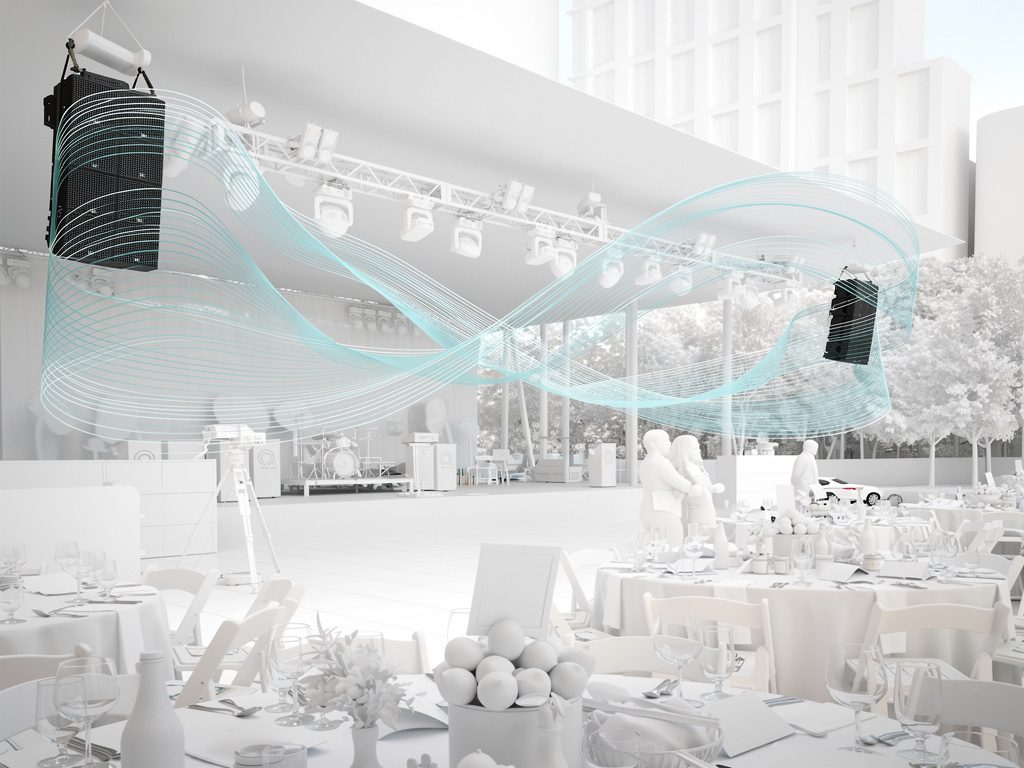
3D Beamforming is a method of controlling acoustic radiation in three dimensions to deliver predictable, uniform sound across an entire audience. It is not simply a way to aim sound. It is a way to control how sound behaves spatially so that every listener receives the same intended experience.
The reality of audience geometry
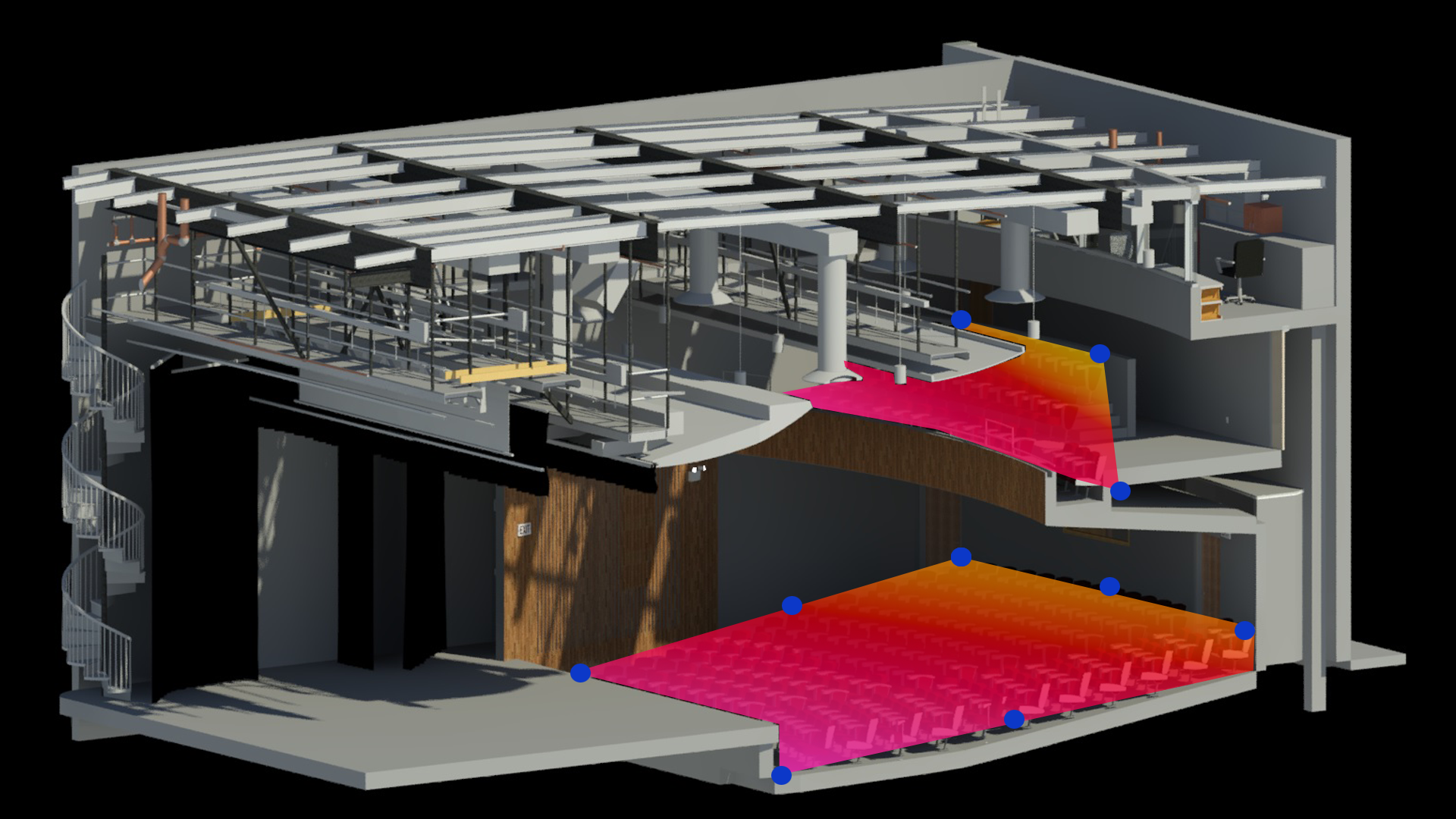
Audiences are three-dimensional.
Real audiences occupy wide, irregular, three-dimensional regions. Listeners at the far sides are often much farther from the loudspeaker than those near the centre, and height differences add further variation in distance and arrival time.
Any system that optimises along a single dimension ignores the true geometry of the audience. That oversimplification is the root cause of inconsistent sound in most venues.
Why conventional loudspeakers are so restrictive

Point sources
Coverage by aiming and placement.
Traditional loudspeakers are fundamentally point sources. They radiate sound outward in broad, pre-defined patterns with limited ability to control where acoustic energy travels. Coverage is achieved primarily through mechanical aiming and physical placement.
Once sound leaves the loudspeaker, it is free to interact with the room. Walls, ceilings, floors, and architectural surfaces are excited before sound reaches many listeners. This interaction produces early reflections, reverberation, and uneven coverage. Attempts to correct these effects rely on equalization, processing, or acoustic treatment. These methods do not prevent the problem. They manage its consequences.
As audience size increases, point-source limitations become more severe. Listeners closer to the loudspeaker experience excessive level. Listeners farther away experience reduced level and altered tonal balance. Horizontal distance differences across wide seating areas are not compensated. Stereo imaging collapses rapidly away from the centerline.
The sweet spot remains small. Consistency is compromised.
Line arrays and steered columns
One axis, one sweet spot.
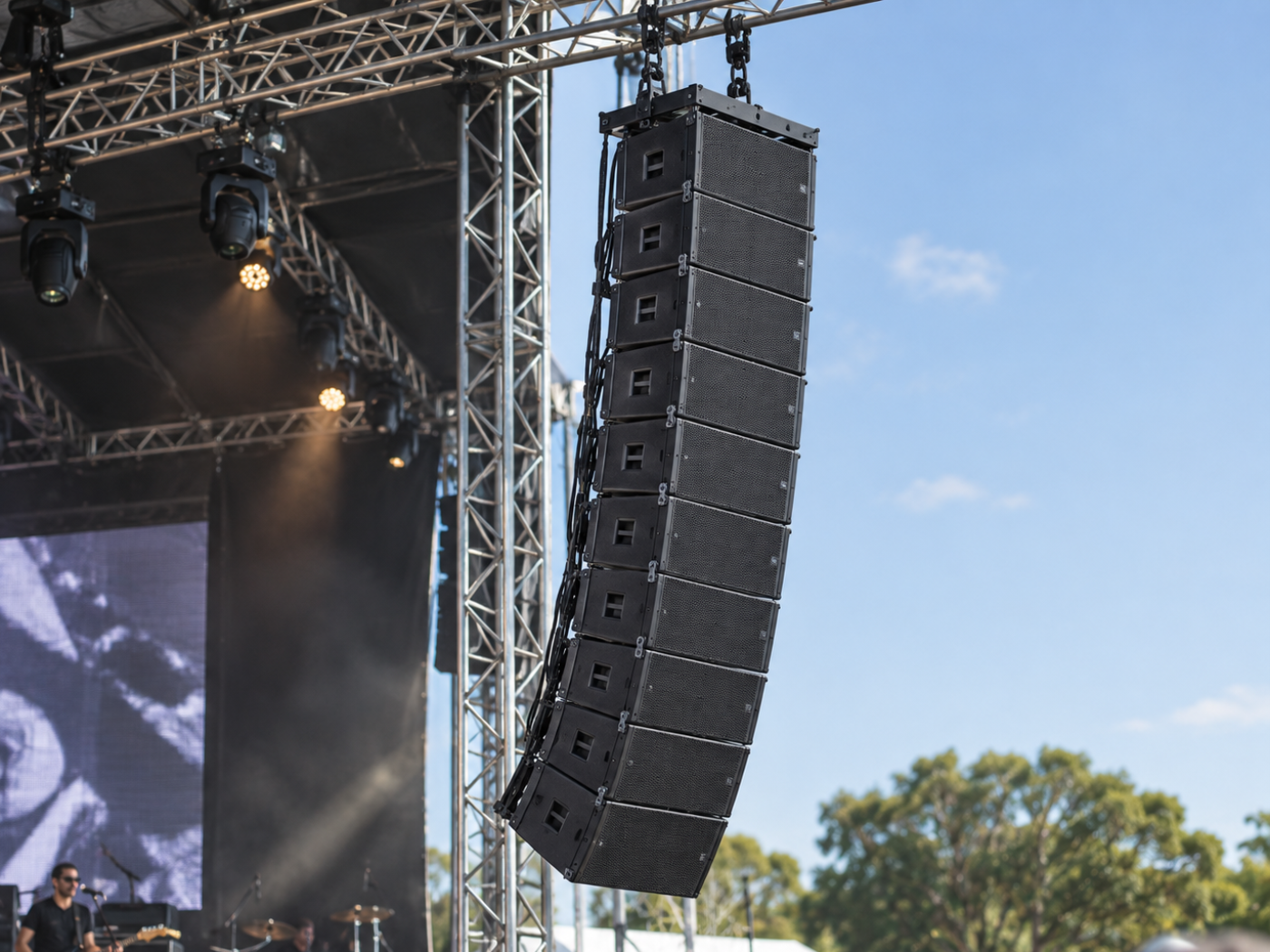
Conventional line arrays and electronically steered column loudspeakers primarily control sound along a single axis. This axis is typically front-to-back, managing how level decays with distance.
Horizontal coverage is largely fixed by physical geometry and is not actively compensated. Listeners seated toward the sides are often significantly farther away than listeners near the center. Single-axis control does not address these horizontal distance differences. Large portions of the audience experience inconsistent level, tonal balance, and spatial accuracy.
This limitation mirrors the fundamental problem of conventional stereo sound. Accurate stereo imaging exists only when the listener is equidistant from the left and right loudspeakers. As listeners move away from the centerline, distance differences increase. Timing, level, and spectral balance shift. Localization collapses.
Single-axis coverage control extends this same failure across the entire audience.
Why 3D Beamforming is different
Control in three dimensions.
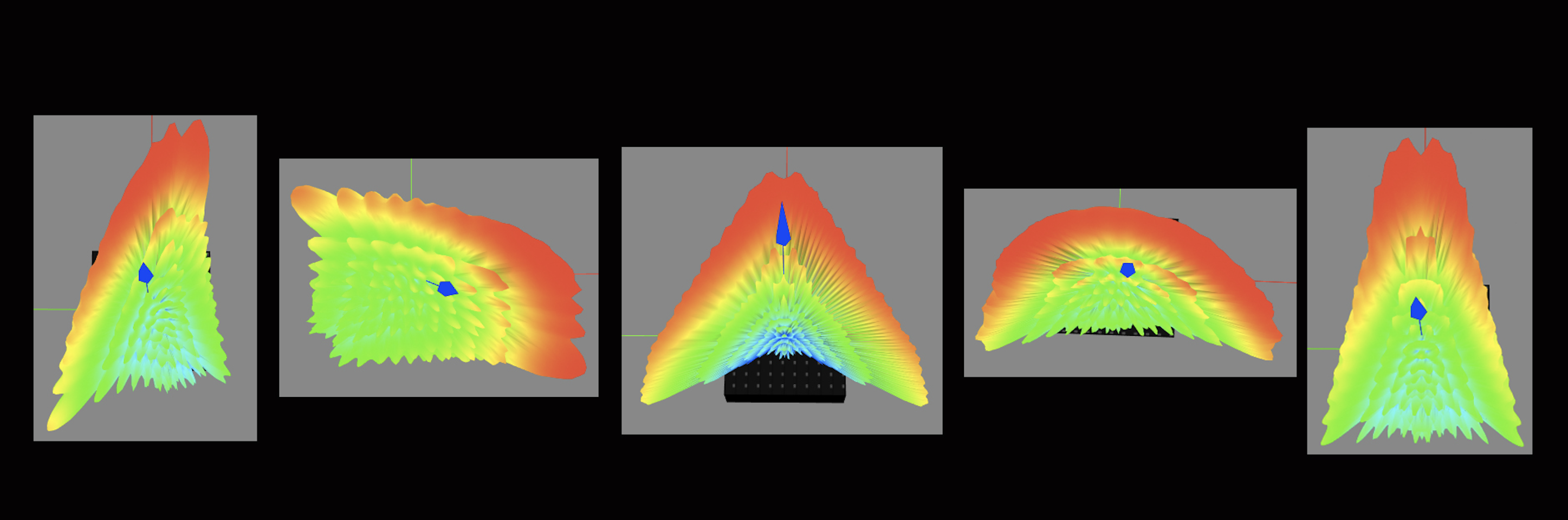
3D Beamforming accounts for the full geometry of the audience. Sound is shaped horizontally, vertically, and in depth. Distance differences across the entire audience area are compensated. Sound pressure level, frequency response, and imaging is matched for every listener. Rather than optimizing for a single axis or a single position, the system optimizes for the entire audience.
Four outcomes. One system.
These outcomes define focused precision.
- 01Consistent sound pressure levelAcoustic energy is distributed so that listeners at different distances receive equivalent sound pressure levels, across the full width and depth of the audience. Excessive level at the front is avoided. Insufficient level at the sides and rear is eliminated. Uniform loudness replaces compromise.
- 02Consistent frequency responseDistance and room interaction affect different frequencies unequally. Frequency-dependent behavior is managed through time alignment of multiple sources, minimizing overlap, echoes and reflections and compensating for frequency related attenuation through air absorption and distance losses. Voices retain intelligibility. Music retains clarity and detail.
- 03Consistent stereo and immersive localisationHorizontal and vertical distance differences across the audience are compensated for in both time and level. The traditional sweet spot expands to include the entire audience area. Stereo imaging remains correct. Every listener experiences the intended spatial image.
- 04Reduced reflections, echoes and noise spillWhen sound is delivered only where it is needed, less energy reaches reflective surfaces. Early reflections are reduced. Reverberant buildup is shortened. Echoes are minimized. Environmental noise spill into adjacent spaces is reduced. The room becomes quieter because unnecessary sound is never generated.

Next · Perception
Volumetric Wavefield Synthesis
Beamforming determines how sound is delivered. Volumetric synthesis determines how it is experienced — and why conventional immersive systems can never escape the sweet spot.