Why conventional approaches fall short.
Most audio systems are designed to radiate sound broadly into a space. Sound interacts with walls, ceilings, and architectural surfaces before it reaches listeners. Alternative technology can only control in one dimension only and have 1 dimensional depth compensation at best. This interaction creates reverberation, echoes, uneven coverage, unstable spatial imaging, and environmental noise spill.
Additional processing, acoustic treatment, and complex system designs are then used to manage the consequences.
EDC technologies address these problems by preventing them.
A unified principle
One principle. Multiple dimensions of control.
DimensionThe problem it removesHow it does itWhere it fits
01 · Direction3D BeamformingRead →
Uneven level, tone and timing across audiences with varying dimensions and distances. Listener fatigue, a lack of clarity and poor audio quality.
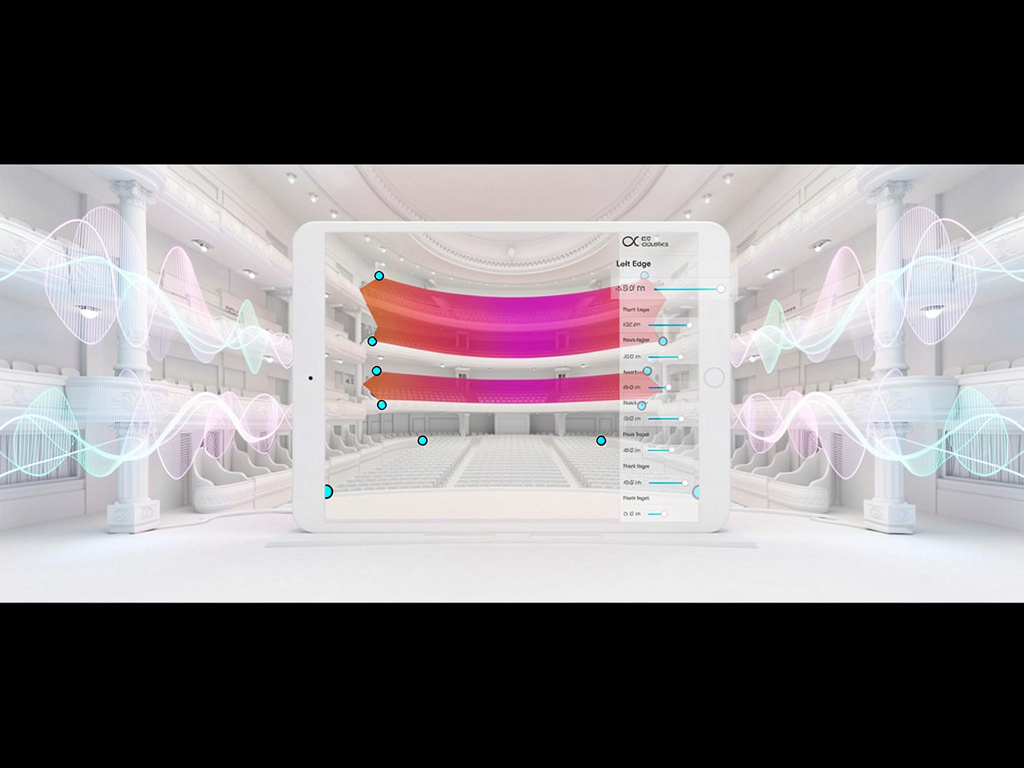
Shapes acoustic energy horizontally, vertically and in depth so every seat receives the same level and frequency response. Energy is not directed at non-audience surfaces, reducing echoes, reflections, noise spill and reverb.
Any venue where all audience members must hear one consistent thing.
02 · PerceptionVolumetric Wavefield SynthesisRead →
Conventional systems have a limited sweet spot where imaging is correct only for a small number of people. Audio sources limited to come from a boundary position.
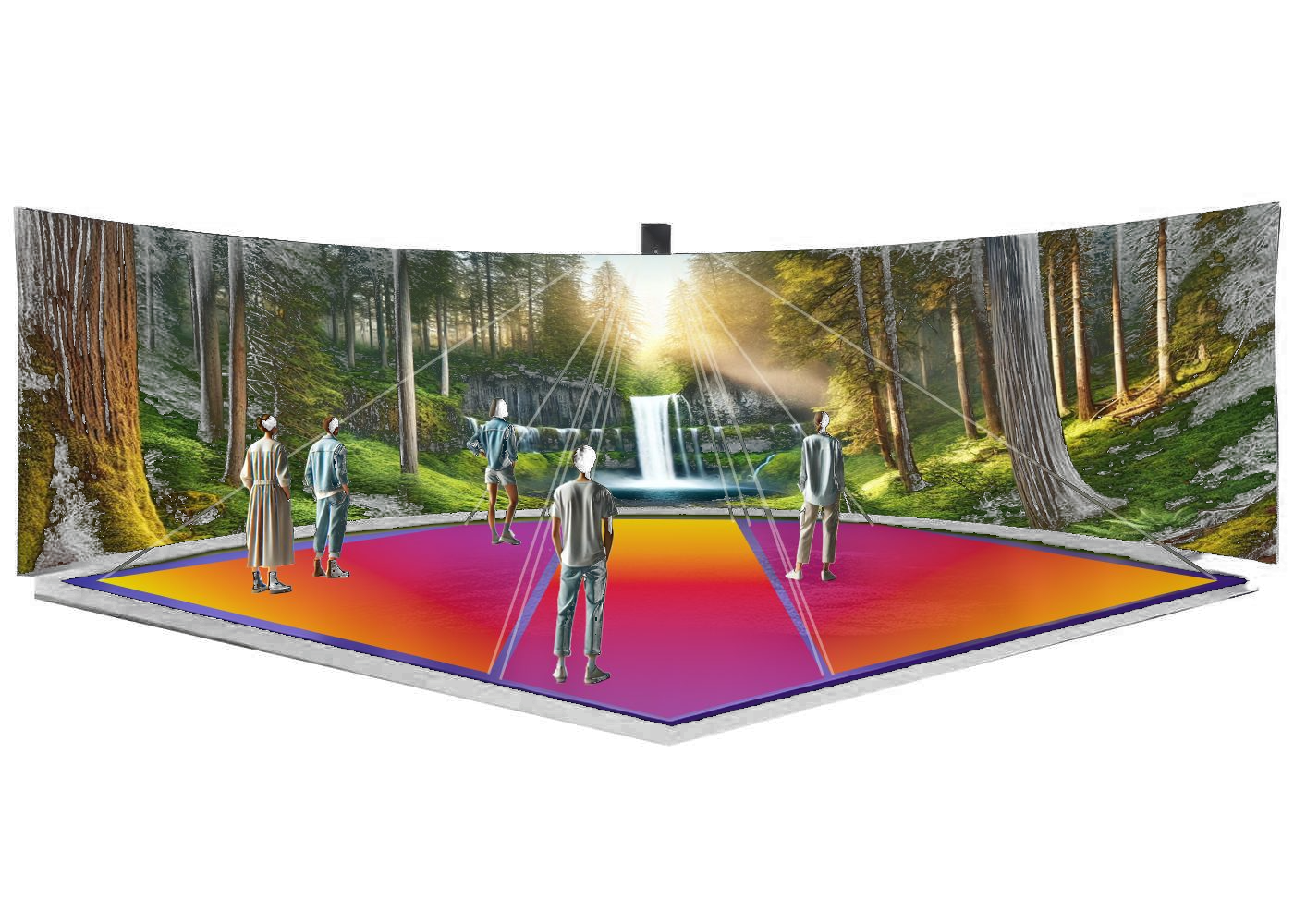
Audio sources are scattered through the volume of the space, which regenerates the spatial image independently for every listener.
Immersive, theatrical and experiential spaces where realism matters.
03 · ContainmentOctoid & Quadoid radiationRead →
Sound radiates with spherical expansion, reaching places it should not — adjacent zones, other visitors and unwanted spaces.
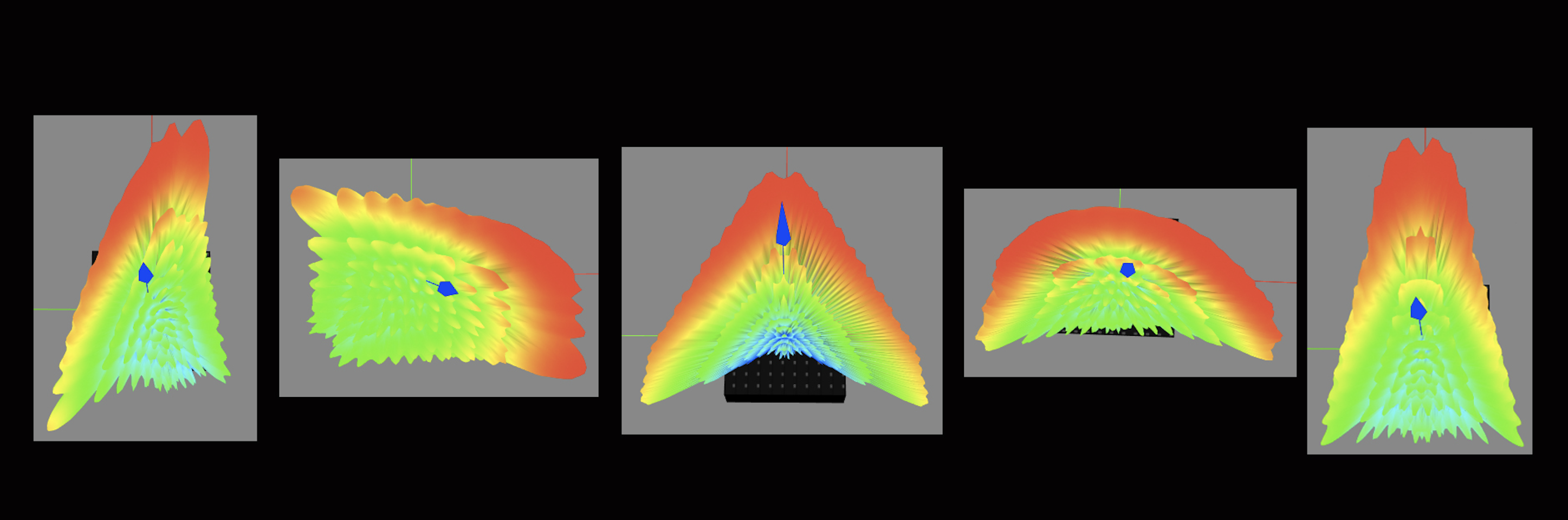
Confines broadband radiation to a quarter or an eighth of a sphere.
Museums, exhibits, transport hubs, retail — sound contained to a limited space. Launching 2027.